


How do you know if water from a well is safe to drink?
For cities like Christchurch, where much of the drinking water comes from groundwater, answering that question is critical.
While groundwater is often naturally protected, understanding whether a source is vulnerable to contamination isn’t always straightforward. Water suppliers need confidence that the water they draw from is protected from microbial and viral contamination, but no single test can provide a complete picture.
Understanding that risk is important because it influences key decisions, like the level of water treatment required and where risk management efforts should be focused.
We explored multiple lines of evidence that can be combined to build a clearer understanding of groundwater security.
Rather than relying on a single test, experts from Lincoln Agritech, PHF, and Aqualinc examined groundwater from several different angles, including how water moves through the ground, how long it has been underground, whether there are signs of influence from the land surface, and whether there is any evidence of viral contamination.
Each approach provided a different piece of the puzzle.
“We used several different methods to answer the same question: how likely is it that a groundwater source could be contaminated?” Said Lincoln Agritech Senior Research Scientist Helen Rutter.
Across a number of projects, the different methods produced consistent results. Together, they helped identify wells containing younger, more surface-influenced water and supported assessments of viral contamination risk.
This information was also used to help prioritise higher-risk wells for well-deepening, as well as to support the assessment of lower-risk, Class A wells.
“When multiple lines of evidence point to the same conclusion, we can have much greater confidence in our understanding of the risk,” said Helen.
For water suppliers, that confidence matters.
A better understanding of risk helps target resources where they will have the greatest impact and supports more informed decisions about drinking water management.
For Lincoln Agritech, the project demonstrates the value of bringing different types of evidence together to address complex water security challenges and help communities make more informed decisions about the safety and resilience of their drinking water supplies.
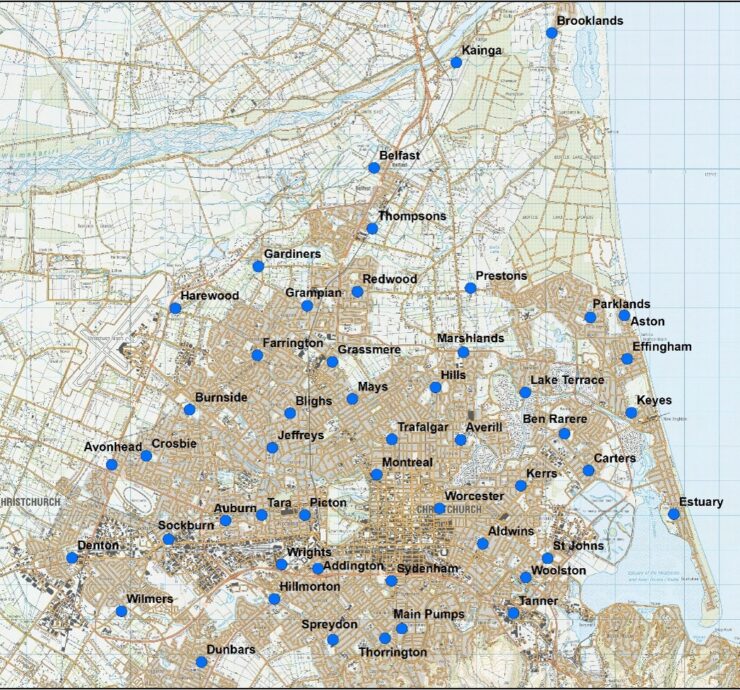
(Image: Map showing Christchurch’s distributed network of wells)